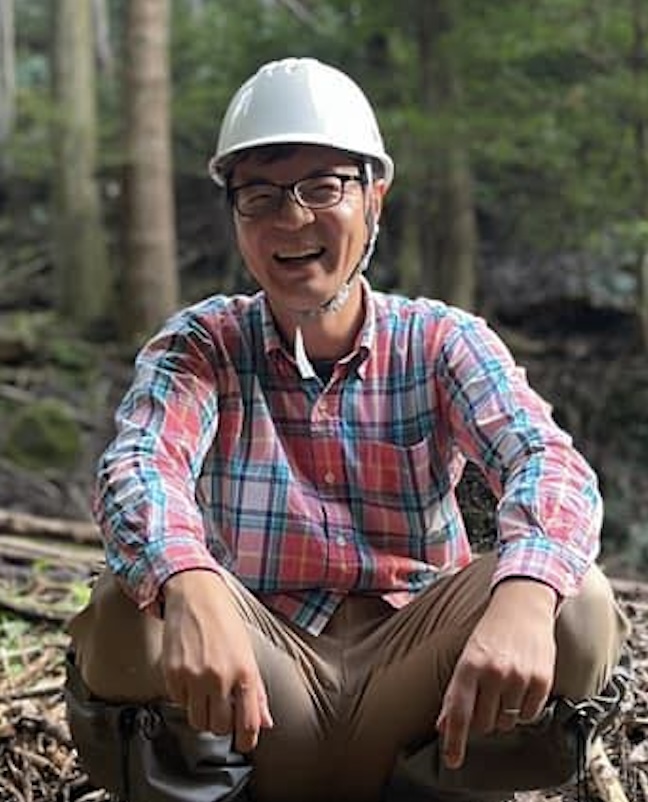
Dai Yamazaki (CV - English)
Associate Professor, Institute of Industrial Science, The University of Tokyo
Global Hydrodynamics Lab Principal Investigator
Unraveling the interactions between the global water cycle, climate, and society
through the integration of physical modeling and satellite observations of terrestrial water dynamics
Global Hydrodynamics is a research field that aims to understand, at the scale of the entire Earth, the transport and storage of terrestrial water and its interactions with the Earth system.
Main Research Themes
Development of global river hydrodynamics models
Water flows in rivers and floodplains are inherently multi-scale phenomena, strongly controlled by both basin-scale water budgets (over 1,000 km) and fine-scale channel and micro-topographic features (below 100 m). A central challenge in global hydrodynamics modeling is how to bridge this large gap in spatial scales within a single, consistent theoretical framework.
I develop global river models CaMa-Flood that can consistently simulate water levels, discharge, and inundation extent using efficient algorithms based on subgrid topography representation. Rather than focusing only on discharge, my goal is to reproduce, consistently at the global scale, the basic physical principle that “water flows from higher to lower places.” Designing model structures that satisfy both computational efficiency and physical fidelity is key to this effort.
CaMa-Flood is one of the few models currently capable of consistently simulating discharge, water levels, and inundation extent for all rivers on Earth. It is released as open source, has over 1,000 registered users, and has grown into an international modeling platform used by research institutes and operational meteorological agencies worldwide.
Development of high-accuracy global topography and hydrography datasets
Accurate simulations of terrestrial water dynamics require not only advanced numerical models but also high-quality topographic information that governs where and how water flows. At the global scale, building hydrologically consistent topography datasets is itself a major challenge. While satellite observations provide global coverage, they often contain noise and systematic errors that can hinder the correct representation of drainage structures and flow paths.
To address this, I integrate multiple satellite datasets and geospatial information and reconstruct them into river topography datasets consistent with natural drainage structures, thereby developing foundational global topography/hydrography datasets for terrestrial water dynamics modeling. Representative products include the global elevation dataset MERIT DEM, the global hydrography dataset MERIT Hydro, and the Japan Flow Direction map J-FlwDir. By systematically building hydrologically consistent geospatial foundations, I contribute to the broader Earth science community.
Monitoring the terrestrial water cycle by integrating models and satellite observations
Recent advances in satellite technology are making it increasingly possible to observe water surface elevation and inundation extent at the global scale. However, observations remain incomplete in space and time, and observation data alone cannot reveal the full picture of the water cycle.
I therefore develop data assimilation and model optimization approaches that integrate numerical models with satellite and in situ observations, enabling estimation of the global water cycle through the fusion of theory and data. Quantities that are not directly observable—such as river channel depth or floodplain storage—can also be inferred through model–data consistency. This inference process is an attempt to advance both “measuring” and “understanding” terrestrial water dynamics at the scale of the Earth.
Flood risk under climate change and water–society interactions
Climate change may alter precipitation patterns and the frequency of extreme discharges, but its impacts are intertwined with basin topography, river characteristics, land use, and societal responses in complex ways. Physically based global hydrodynamics simulations provide a foundation for treating these interacting factors within a unified framework.
By coupling hydrodynamics with climate-model outputs and conducting large ensemble analyses, I assess future flood risks and probabilistic hazard metrics. I also investigate how terrestrial water variability affects society and ecosystems, and how human activities feed back into hydrodynamic systems. In problem settings that span the boundary between natural and social systems, hydrodynamics models play a role in connecting fundamental science to real-world decision making. I also work with industry–academia collaborations to explore climate change adaptation strategies centered on flood risk.
Playable Hydrology: water-cycle education based on rainfall–runoff modeling
Rainfall–runoff processes are fundamental hydrological mechanisms underlying floods, yet their multi-stage and nonlinear structures make them difficult for beginners to grasp intuitively. To address this, I developed SplashTune, which turns physically based rainfall–runoff simulations into an interactive game, and I study process-based hydrology education methods. By presenting a framework in which floods are understood not merely as disaster events but as dynamical consequences of differences in basin conditions and surface states, I aim to help more people recognize both the intellectual appeal of hydrological models and their societal relevance.
Under the concept of “Playable Hydrology,” this research integrates physical models with game-based learning to bridge hydrological expertise and societal water literacy. At the same time, it aims to translate model-based thinking cultivated in cutting-edge hydrodynamics research into educational practice, thereby narrowing the gap between frontier research and the classroom.
International research hub for global terrestrial water dynamics
Based at the Institute of Industrial Science, The University of Tokyo, I work to build an international hub for research on global terrestrial water dynamics. I place strong emphasis on training PhD students and postdoctoral researchers, while actively hosting international students, interns, and visiting/sabbatical scholars to cultivate a collaborative environment where researchers with diverse backgrounds work together.
I also lead community building in global river modeling through organizing international workshops and continuously planning international conference sessions, including the CaMa-Flood International Developer/User Meeting. By advancing research, education, and community development as an integrated effort, I aim to strengthen the international research infrastructure of global hydrology and foster the next generation of researchers.
Key Research Products
- CaMa-Flood: global river hydrodynamics model
- MERIT DEM: high-accuracy global elevation dataset
- MERIT Hydro: global hydrography dataset
- J-FlwDir: Japan flow-direction map
- SplashTune!: rainfall–runoff modeling game
Career
Current Positions
Based at the Institute of Industrial Science (Komaba Research Campus), The University of Tokyo, I promote research in global hydrology and global terrestrial water dynamics, while working to build an international research hub and to train the next generation of researchers.
- Associate Professor, Institute of Industrial Science, The University of Tokyo
- Global Hydrodynamics Lab Principal Investigator
- [Graduate Program Faculty] Department of Civil Engineering, Graduate School of Engineering, The University of Tokyo
- [Affiliation] UTokyo Center for Climate Solutions (UTCCS)
- [Affiliation] GPES (Graduate Program on Environmental Sciences), Graduate School of Arts and Sciences, The University of Tokyo
- [Affiliation] Center for Spatial Information Science (CSIS), The University of Tokyo
Previous Positions
While keeping hydrology as my core discipline, I have gained experience across diverse research environments beyond engineering and civil infrastructure, including Earth science, geography, and climate science, fostering an interdisciplinary perspective.
- Assistant Professor, Institute of Industrial Science, The University of Tokyo (Apr 2017–Apr 2018)
- Development of global terrestrial water dynamics models and applications to Earth system research
- Researcher, Integrated Climate Change Projection Research Program, JAMSTEC (Apr 2014–Mar 2017)
- Development of global terrestrial water dynamics models and applications to Earth system research
- JSPS Postdoctoral Fellow for Research Abroad (Jun 2012–Mar 2014)
- Visiting Researcher, School of Geographical Sciences, University of Bristol, UK
- Improving large-scale flood prediction using satellite observations and a global river–floodplain model
- Project Researcher, Institute of Industrial Science, The University of Tokyo (Apr 2012–May 2012)
- Worked on “Global water sustainability risk assessment led by an integrated water cycle and water resources model”
- Visiting Researcher, Byrd Polar Research Center, The Ohio State University (Jul 2010–Dec 2010)
- Collaboration for the new NASA/CNES SWOT satellite mission (with Prof. Doug Alsdorf)
- JSPS Research Fellow (DC1) (Apr 2009–Mar 2012)
- Development of land surface hydrology models with realistic representation of terrestrial water storage
Joint/Visiting Appointments and Other Roles
- Graduate Program Faculty, Department of Civil Engineering, Graduate School of Engineering, The University of Tokyo (Apr 2018–)
- Affiliation, UTCCS (UTokyo Center for Climate Solutions) (Jul 2022–)
- Affiliation, GPES (Graduate Program on Environmental Sciences), Graduate School of Arts and Sciences, The University of Tokyo (Apr 2022–)
- Affiliation, CSIS (Center for Spatial Information Science), The University of Tokyo (Apr 2019–)
- Technical Advisor, ECMWF (Jul 2022–)
- Invited Principal Researcher, JAMSTEC (Jun 2018–Mar 2019)
- Invited Researcher, JAMSTEC (Jun 2017–May 2018)
Education
At the Department of Civil Engineering, The University of Tokyo, I engaged in frontier research on hydrology and climate change, while also cultivating a perspective on how scientific knowledge can be returned to society and used through dialogue with real-world stakeholders.
- Ph.D., Department of Civil Engineering, Graduate School of Engineering, The University of Tokyo (Mar 2012)
- Physical modeling of large-scale inundation in continental rivers worldwide
- PhD Thesis PDF
- M.Eng., Department of Civil Engineering, Graduate School of Engineering, The University of Tokyo (Mar 2009)
- Development of a global river routing model considering floods from channels to floodplains
- B.Eng., Department of Civil Engineering, Faculty of Engineering, The University of Tokyo (Mar 2007)
- Niigata Prefectural Niigata High School (Science Track) (Mar 2003)
Research Achievements, Activities, and Projects
Research Metrics Summary (as of Feb 2026)
- Peer-reviewed international journal papers: 136
- 52 are first-authored/corresponding-authored by members of the Yamazaki Lab
- Peer-reviewed Japanese journal papers: 44
- 20 are first-authored/corresponding-authored by members of the Yamazaki Lab
- Total citations: 20,607+ (Google Scholar)
- H-index: 61
- Papers cited 100+ times: 35
Selected Publications
A review paper summarizing 15 years of development and applications of the global river hydrodynamics model CaMa-Flood.
- Advancing global river hydrodynamics simulations by catchment-based macro-scale floodplain modeling approach
Dai Yamazaki
Geoscience Letters, 12, 72, 2025
https://doi.org/10.1186/s40562-025-00452-z
MERIT Hydro: a hydrologically consistent, high-resolution global hydrography dataset built by integrating the latest global topography products.
- MERIT Hydro: A high-resolution global hydrography map based on latest topography datasets
Yamazaki, D., D. Ikeshima, J. Sosa, P.D. Bates, G.H. Allen, T.M. Pavelsky
Water Resources Research, 55, 5053–5073, 2019
https://doi.org/10.1029/2019WR024873
Proposal of MERIT DEM, a high-accuracy global elevation model with substantially reduced errors by integrating multiple satellite-based elevation datasets.
- A high-accuracy map of global terrain elevations
Yamazaki, D., D. Ikeshima, R. Tawatari, T. Yamaguchi, F. O’Loughlin, J.C. Neal, C.C. Sampson, S. Kanae, P.D. Bates
Geophysical Research Letters, 44, 5844–5853, 2017
https://doi.org/10.1029/2017GL072874
A foundational study introducing physically based floodplain inundation processes into a global river model to jointly reproduce water levels and inundation extent.
- A physically-based description of floodplain inundation dynamics in a global river routing model
Yamazaki, D., S. Kanae, H. Kim, T. Oki
Water Resources Research, 47, W04501, 2011
https://doi.org/10.1029/2010WR009726
Yamazaki & Yamazaki Lab’s publications are summarized below.
Academic Community Service
In the fields of global terrestrial water dynamics and large-scale river modeling, I contribute to building and advancing the international research community by organizing scientific meetings and serving in academic societies, creating forums for cross-disciplinary discussion.
Organization of international meetings and conference sessions
- CaMa-Flood International Developer/User Meeting (2024–)
- AOGS Large-scale River Modelling Session (2025–)
- JpGU Session “Water and sediment dynamics from land to coasts” (2018–)
- Organized many other international workshops and scientific meetings hosted by the Yamazaki Lab
Committees and professional service
- JpGU Delegate, Atmosphere and Hydrosphere Section (2026–)
- JpGU Program Committee Member (2019–2026)
- Board Member, Japan Society of Hydrology and Water Resources (2019–2023); Liaison for JpGU
- Program Committee Member, Annual Meeting of the Japan Society of Hydrology and Water Resources (2024)
- Committee Member, Online Lecture Series, JSCE Hydraulic Engineering Committee (2023–2024)
- Member, WCRP LHA (Land–Hydrology–Atmosphere) Committee (2021–2022)
Selected Awards
For pioneering contributions to global terrestrial water dynamics modeling and the integration of satellite observations with numerical models, I have received major recognitions including international society awards, the MEXT Minister’s Commendation for Science and Technology (Young Scientist Award), and the JSPS Ikushi Prize.
-
2020 AOGS Kamide Distinguished-Lecture Award
Recent advances in global-scale surface water hydrodynamics modelling
Asia Oceania Geosciences Union (Jul 2020) -
2020 Inoue Research Award
Research theme: “Understanding terrestrial surface water dynamics at the global scale by integrating satellite observations and numerical models”
Inoue Foundation for Science (Feb 2020) -
MEXT Minister’s Commendation for Science and Technology (Young Scientist Award), FY2019
Research theme: “Global terrestrial water dynamics research”
Ministry of Education, Culture, Sports, Science and Technology (Apr 2019) -
Early Career Scientist Presentation Award, 7th GEWEX International Scientific Conference on the Global Water and Energy Cycle
Global Hydrodynamic Modelling of Large-scale Flooding in Continental Rivers
WCRP/GEWEX (Jul 2014) -
Dean’s Award (Research), Graduate School of Engineering
Ph.D. thesis: “Physical modeling of large-scale inundation in continental rivers worldwide”
The University of Tokyo (Mar 2012) -
JSPS Ikushi Prize (2nd Award Cycle)
Outstanding doctoral research: “Physical modeling of large-scale flooding in continental rivers worldwide”
Japan Society for the Promotion of Science (Jan 2012) -
Furuichi Prize (Best Master’s Thesis), Department of Civil Engineering
Master’s thesis: “Development of a global river routing model considering floods from channels to floodplains”
The University of Tokyo (Mar 2009) -
Dean’s Award (Research), Graduate School of Engineering
Master’s thesis: “Development of a global river routing model considering floods from channels to floodplains”
The University of Tokyo (Mar 2009)
Students and postdoctoral researchers under my supervision have also received numerous awards from universities and academic societies, reflecting sustained recognition of the lab’s research and training activities.
Click here for Lab awards list
Research Projects as PI
As a principal investigator and co-investigator, I have continuously secured research funding and lead a research group of about 20 members, centered on PhD students and postdoctoral researchers.
-
2024–2025 Kajima Foundation, International Joint Research Grant
Advancing weather and climate prediction by coupling global river models with Earth system models -
2022–2027 Transformative Research Areas (A): Macro Coastal Oceanography (Planned Research)
Understanding impacts of extreme river discharge events on ocean circulation -
2021–2025 NEDO Program for Discovering and Supporting Young Researchers (Collaborative Research Phase)
Creating large-scale flood risk information using climate-model outputs and big geospatial data -
2020–2024 JSPS KAKENHI (B)
Advancing global river water dynamics simulations using satellite observations of surface water -
2020–2021 ECMWF
Refactoring CaMa-Flood toward integration into the ECMWF forecasting system -
2016–2020 JSPS KAKENHI (Young Scientists A)
Estimating underwater river depth using a global river model and satellite altimetry -
2014–2016 JSPS KAKENHI (Start-up Support for Research Activities)
Improving large-scale flood prediction by building global datasets of river width and depth -
2012–2014 JSPS Postdoctoral Fellow for Research Abroad
Improving large-scale flood prediction using satellite observations and a global river–floodplain model
Two-year placement at the University of Bristol, UK -
2010 Program for Supporting Young Researchers’ Overseas Research Activities
Collaboration for the new NASA/CNES SWOT satellite mission (with Prof. Doug Alsdorf)
Six-month placement at The Ohio State University, USA -
2009–2012 JSPS Research Fellow (DC1)
Development of land surface hydrology models with realistic representation of terrestrial water storage