CaMa-Flood developer/user international meeting
We had the 2nd international meeting on CaMa-Flood and global hydrodynamics
on 10th and 11th September, 2026 (Thusday - Friday) at ECMWF headquarters in Reading, United Kingdom.
2026 Program
2026 Meeting program is available here
2026 Presentation Abstracts are available here
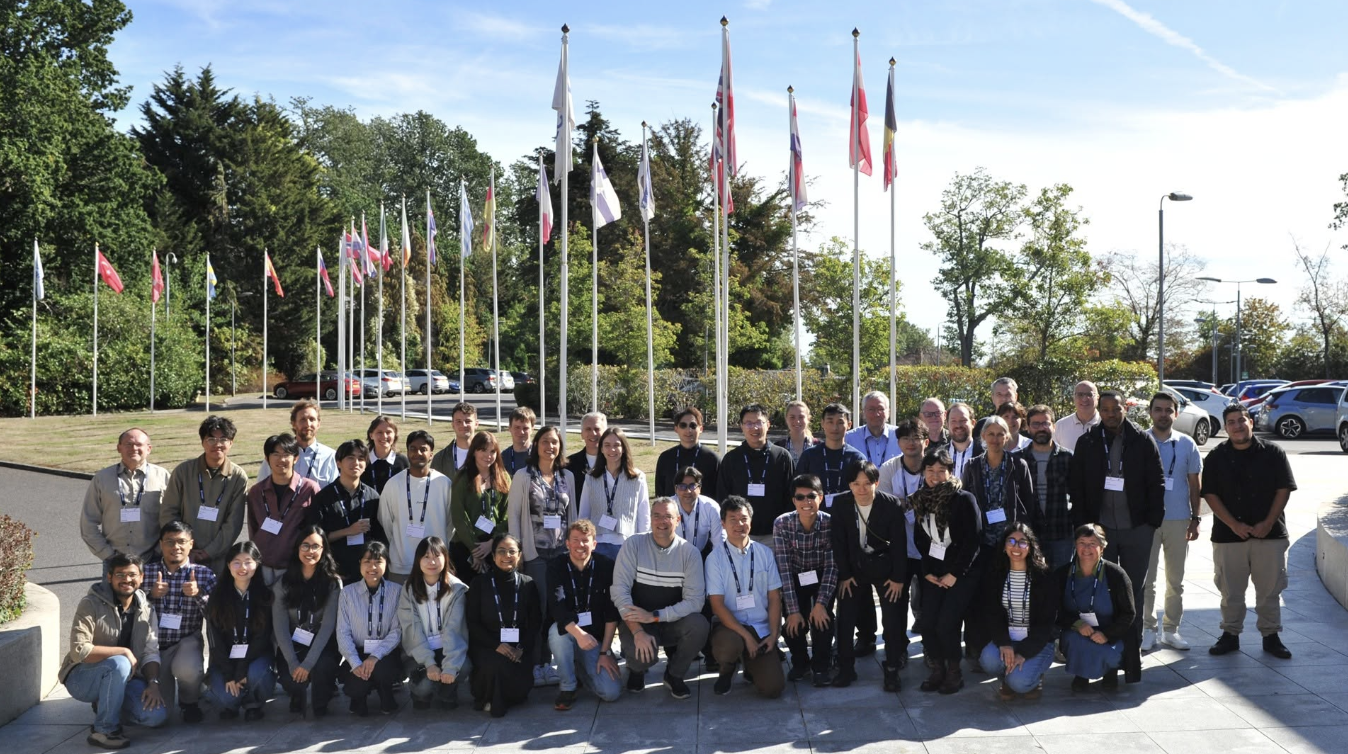
(Group photo of 2026 meeting in ECMWF)
2026 Meeting Awardee
Based on the votes by all participants, four presenters are awarded for their huge contribution to CaMa-Flood modelling community.
=== CaMa-Flood best developer award ===
Nozomi Uemachi (The University of Tokyo
Extending CaMa-SED for Robust Continental-Scale Hydro-Sediment-Morphodynamic Modeling
Do Ngoc Khanh (Shibaura Institute of Technology
A global levee database derived from high resolution digital elevation models
=== CaMa-Flood best user/application award ===
Faizal I. W. Rohmat (Institut Teknologi Bandung)
A Preliminary Regional-Scale Feasibility Assessment of CaMa-Flood for Flood Screening and Monitoring Support in Data-Scarce Regions of Indonesia
=== CaMa-Flood early career award ===
Hancheng Ren (Beijing Normal University)
GraphRiverCast: A Topology-Informed AI River Model for Global River Hydrodynamics
About the meeting
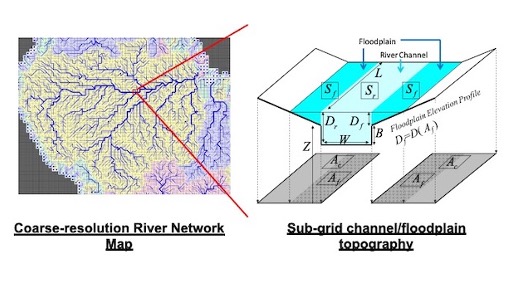
Over the past 15 years since its initial development, the global river model CaMa-Flood has undergone substantial advancements, evolving into a physically consistent and versatile framework for large-scale river hydrodynamics. Based on the catchment-based macro-scale floodplain (CMF) approach, the model explicitly represents water surface elevation, enabling realistic simulations of river discharge, water level, and floodplain inundation across continental to global scales.
Recent developments have further expanded its capabilities, including the integration of high-accuracy global topography datasets, advances in computational performance (e.g., parallelization and GPU implementations), and the incorporation of new process representations such as levee effects and tracer transport. In parallel, the increasing availability of satellite observations has opened new opportunities for model validation and data assimilation, strengthening the link between simulations and real-world observations.
As a result, CaMa-Flood is now widely used in a broad range of applications, including global flood risk assessment, Earth system modelling, real-time hydrological monitoring, and studies of biogeochemical and ecosystem processes.
The 2nd International Meeting for CaMa-Flood Developers and Users was held to bring together the growing community, exchange knowledge and expertise, share recent scientific and technical advances, and discuss future directions in global river hydrodynamics and its applications.
While the meeting was centered on CaMa-Flood, it also welcomed participation from the broader community working on global and large-scale hydrodynamic modelling, including researchers developing and applying other modelling frameworks.
The meeting brought together CaMa-Flood developers and users, as well as researchers interested in global river hydrodynamics, Earth system science, flood risk, and related fields. It provided a valuable opportunity for stimulating discussions, exchange of ideas, and the development of new collaborations across different modelling approaches and research communities.
Meeting Info
Date and location
The CaMa-Flood meeting took place through 9th and 11th September, 2026 (Wednesday - Friday).
- 9th Sep: Pre-conference interactive discussion among users and developers + Icebreaker session (in Reading City, optional)
- 10-11th Sep: Main conference took place in ECMWF
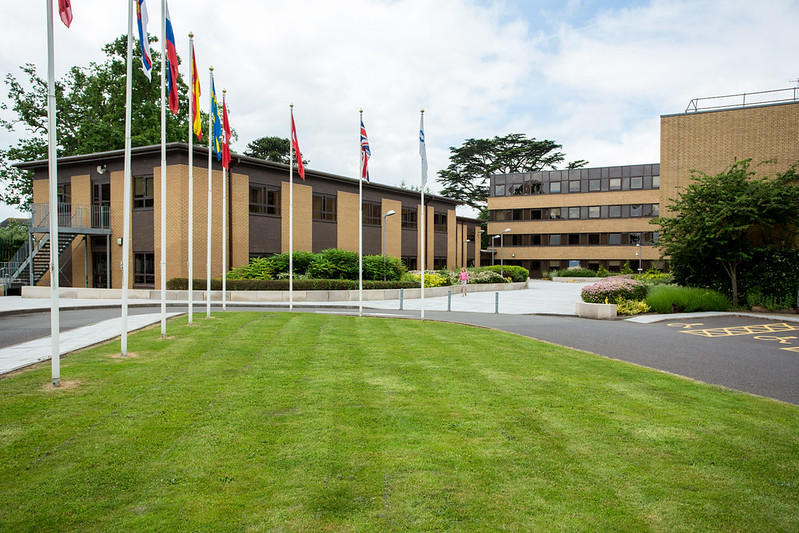
The venue is ECMWF (European Center for Medium-range Weather Forecast) headquarters in Reading, UK.
Shinfield Park, Reading, RG2 9AX, United Kingdom.
(Maps)
Schedule
- 10 Apr: Registration and abstract submission open.
- 14 June: Deadline (Extended) - Registration with abstract submission
- 14 June: Deadline (Extended, early registration recommended) - Request of invitation letter for visa support (for participants requiring a visa)
- End of June: Announcement of the program.
- 31 Jul: Deadline - Registration without abstract submission
- 9 Sep: Pre-conference Interactive Discussion + Icebreaker
- 10-11 Sep 2026: CaMa-Flood developer/user meeting
Registration Form & Deadlines
Participants who wish to give a presentation are required to submit their registration together with an abstract (up to 600 words) by 31 May 2026. You may also include supplementary materials (e.g., figures or extended documents) if needed. Please note that giving a presentation is not mandatory. Participants who do not plan to present may complete their registration by 31 July 2026. Participants who require an invitation letter for visa application purposes must complete their registration and request the letter by 31 May 2026.
Registration Fee
There is no registration fee for the meeting.
Please note that we are unable to offer any financial support for travel expenses at this time, as we do not have any sponsors secured yet.
We kindly ask participants to make their own arrangements for travel and accommodation. Thank you for your understanding.
VISA for the United Kingdom
Please note that any foreign visitor entering the United Kingdom must possess a valid passport for the duration of their stay and must comply with UK immigration requirements.
For short stays (usually up to a few months) for purposes such as attending conferences, business meetings, tourism, or visiting friends and relatives—without engaging in paid work—visitors should check the requirements for a Standard Visitor visa.
Depending on your nationality, you may:
- enter the UK without a visa, or
- be required to obtain a visa in advance, or
- be required to apply for an Electronic Travel Authorisation (ETA) prior to travel.
For full and up-to-date information, please visit the official UK government website: [https://www.gov.uk/check-uk-visa]
A list of visa nationals and visa-exempt countries is also available on the same website.
If you require an invitation letter for visa application purposes, please indicate this by checking the appropriate box in the registration form. Deadline of Registration with VISA invitation letter is 31 May.
Note: Information on visa application procedures has been sent via email to registered participants.
Program
We are considering the following sessions for the CaMa-Flood meeting:
- Opening keynote speeches & icebreaker session
- Oral presentation session focusing on CaMa-Flood development
- Oral presentation session highlighting CaMa-Flood applications
- Poster session scheduled for Thursday evening
These sessions aim to facilitate comprehensive discussions, knowledge sharing, and networking opportunities among participants.
Logistics
CaMa-Flood developer/user international meeting 2026 is co-organized by
- Yamazaki Lab (Global Hydrodynamics Lab)
- Institute of Industrial Science, The University of Tokyo
- ECMWF (European Center for Medium-Range Weather Forecast)
The meeting is supported by
- KAJIMA Foundation, International Joint Research Grant
Organizing Committee
As of April 2026
- Dai Yamazaki (Chair, UTokyo)
- Michel Wortmann (Local Organizer, ECMWF)
- Jiachao Chen (Program Organizer, UTokyo)
- Minako Yokoyama (Secretary, UTokyo)
- Yuki Tsukada (Secretary, UTokyo)
Please email to Dai Yamazaki ( yamadai [at] iis.u-tokyo.ac.jp ) for questions about the meeting.
Past meetings
We had the first-ever international meeting on CaMa-Flood and global hydrodynamics
on 5th and 6th July, 2024 (Friday and Saturday) at the Institute of Industrial Science, The University of Tokyo.
2024 Program
2024 Meeting program is available here
2024 Presentation Abstracts are available here
2024 Awards
Based on the votes by all participants, three presenters are awarded for their huge contribution to CaMa-Flood modelling community.
=== CaMa-Flood best developer award ===
Shengyu Kang (Wuhan University)
A Computationally-efficient practice for global river hydrodynamic models
=== CaMa-Flood best user/application award ===
Michel Wortmann (ECMWF)
CaMa-Flood as part of the ECMWF Integrated Forecasting System
=== CaMa-Flood early career award ===
Mizuki Funato (The University of Tokyo)
Development of a Modified Reservoir Operation Scheme for Improved Global Flood Modelling